Don't Miss




 to add an item to your Itinerary basket.

Written by: Amanda
Date posted: 5th September 2025
Location: Around Cumbria
2025 marked the 200th Anniversary of the birth of the modern railway – something that changed the way we travel forever. To celebrate, join us as we look back at 200 years of rail history in Cumbria.
To begin, we first head east to where a transport revolution began with the opening of the Stockton & Darlington Railway on 27th September 1825, marking the first public passenger train journey. That revolution quickly reached Cumbria, which at the time was heavily involved with the industrial revolution. In the years that followed a number of branch lines were developed and, while many were closed during a 1960s restructuring of the railways by the head of the British Railways Board Dr Beeching, several survive to this day. Read on to find out more.
The West Coast Main Line (London – Glasgow)
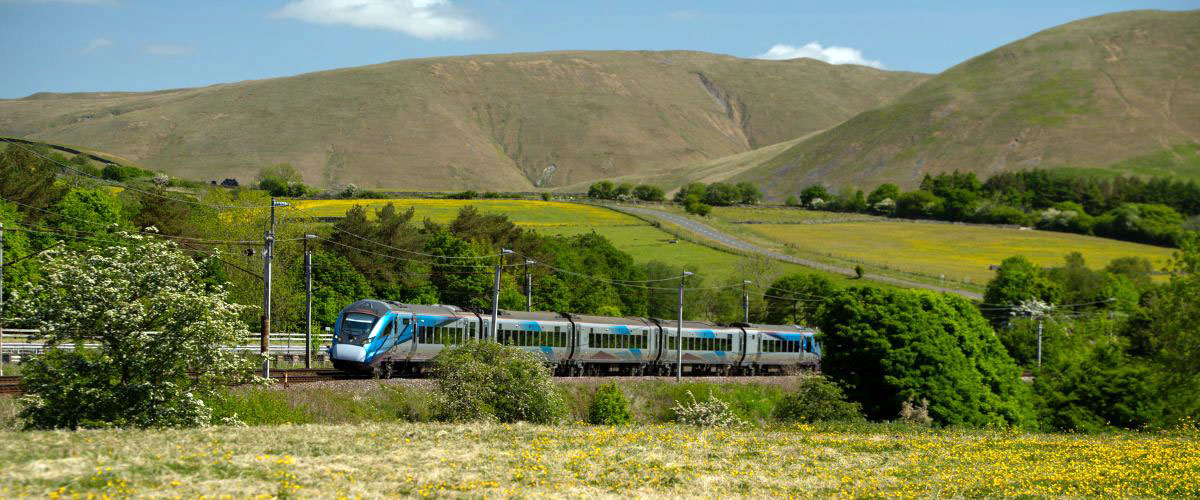
The Cumbrian section of the long-distance West Coast Main Line opened in 1846 when a 72-mile stretch from Lancaster to Carlisle was completed. Initially operated by the Lancaster and Carlisle Railway before being absorbed by the London and North Western Railway (LNWR), this beautiful section of line runs through the Cumbrian countryside from Oxenholme Lake District in the south, and climbs 916 feet to Shap Fell before reaching stations in Penrith and Carlisle.
Electrification of the line through to Glasgow happened in 1974, and today passengers can travel from London Euston to Oxenholme Lake District with Avanti West Coast in as little as 2.5 hours. TransPennine Express and Northern also run services along the line throughout Cumbria and beyond.
.jpg)
The Furness Line (Barrow-in-Furness – Carnforth)
The Furness Line began its working life as a means of transporting iron ore from Dalton-in-Furness and slate from Kirkby -in-Furness to the port of Barrow. Expansion came in 1850s and 1860s with the construction of the Leven viaducts, allowing trains to connect with the West Coast Main Line at Lancaster.
In the 1860s, a branch line was built to Lakeside on the shores of Windermere which carried coal to power the passenger steamers on Windermere and sulphur for the gunpowder works at Backbarrow. Its passenger traffic increased as tourism boomed during the Victorian era. While no longer in public use, today a section of this branch line survives and passengers can enjoy a unique heritage journey on the Lakeside and Haverthwaite Railway.
One of the main investors in the Furness Line, Henry Schnider, was Chairman of the Barrow Hematite Steel Company. He built a magnificent property on the shores of Windermere and travelled to work in style everyday on his private yacht, The Esperance, connecting with the railway at Lakeside. The Esperance is now proudly displayed in the Windermere Jetty Museum: a family-friendly visitor attraction dedicated to the boats, people and rich history of Windermere.
Today, experience the Furness Line with Northern and stop off at the pretty towns of Arnside, Grange-over-Sands and Ulverston en-route.
The Cumbrian Coast Line (Barrow-in-Furness – Carlisle)
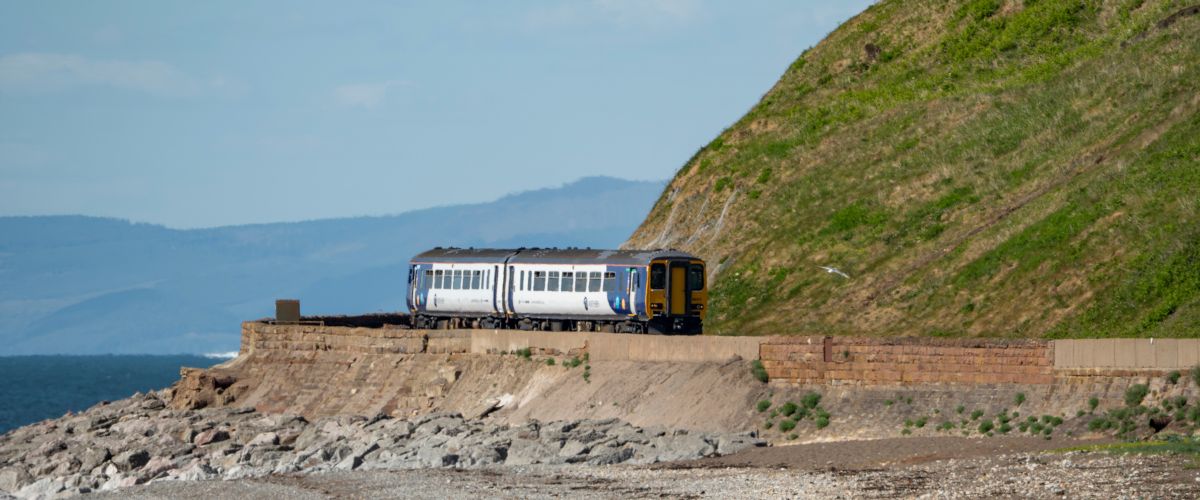
Stretching from Barrow-in-Furness to Carlisle, the Cumbrian Coast Line offers incredible views of the Lake District mountains and stunning Cumbrian coastline, taking in Morecambe Bay, the Duddon Estuary and the Solway Firth.
The line played a key role during the industrial revolution, carrying coal, steel and iron ore throughout the 19th and early 20th century. As heavy industry on the coast declined, goods trains made way for passenger services which remain popular with visitors and locals alike.
Take a break in your coastal rail adventure at Ravenglass to visit the first public narrow-gauge railway in England. The Ravenglass & Eskdale Railway was built between 1873 and 1875 to transport iron ore and from 1876 also carried passengers. Today a fleet of steam and diesel engines transports passengers through stunning Lake District landscapes from the coast to Dalegarth Station.
Top tip: buy a combined ticket for the Cumbrian Coast Line and Ravenglass & Eskdale Railway from Northern to save up to £7.00 per passenger. Checkout Northern’s website for terms and conditions.
Please be aware there are major engineering works taking place to maintain this historic line. Check with Northern before travelling.
.jpg)
The Lakes Line (Oxenholme Lake District – Windermere)
Built for passengers not industry, the Lakes Line (originally known as the Windermere branch line) opened in April 1847. As tourism boomed in the Victorian era, the original plan was to continue the line on to Ambleside. However, campaigning by the likes of William Wordsworth, whose works helped popularise the Lake District, saw the plans halted and the line terminated at Birthwaite which later became Windermere Station.
Today, the Lakes Line is operated by Northern, with onward car-free travel thanks to Stagecoach bus connections from Windermere Station through to places like Bowness-on-Windermere, Ambleside, Coniston, Grasmere and Keswick.
Discover more about Wordsworth’s work, and his campaign to prevent mass tourism through expansion of the railways, at Wordsworth Grasmere (accessible by bus on the popular 555 and 599 services).
Did you know? Windermere Lake Cruises have a historic link with the railways! The popular Windermere based attraction was once owned by The Furness Railway Company, which later purchased London Midland Scottish Railway who in turn, in 1948, became British Rail.
.jpg)
Settle To Carlisle Railway (Settle – Carlisle)
The famous Settle to Carlisle Railway has to be one of the most scenic railway lines ever built in England. Stretching for 73 miles, the line crosses over 20 viaducts including the famous Ribblehead Viaduct (often featured in film and TV); and travels through the stunning landscapes of the Pennines stopping at Kirkby Stephen and Appleby along the way.
The line took 7 years and over 6,000 men to construct. It opened in 1876 and provided Midland Railways with a fast passenger route to compete with those operated by the London and North Western Railway – like the West Coast Main Line – before the two companies were merged into the new London, Midland and Scottish Railway in 1923. The line has faced threat of closure throughout the years, however continues to operate with Northern services travelling along the line.
Inspired to enjoy a railway adventure in the Lake District, Cumbria? Check out tips and ideas for car-free travel here.
You may leave the Lake District, but once you’ve been, it’ll never leave you.
You may also like
Follow The Lake District, Cumbria on Social Media
Receive all the latest news, special offers and information from the Lake District, Cumbria

Ratings Powered By


© Cumbria Tourism