



 to add an item to your Itinerary basket.
Don't Miss
Windermere Lake
Type:Lake
-, Cumbria

About
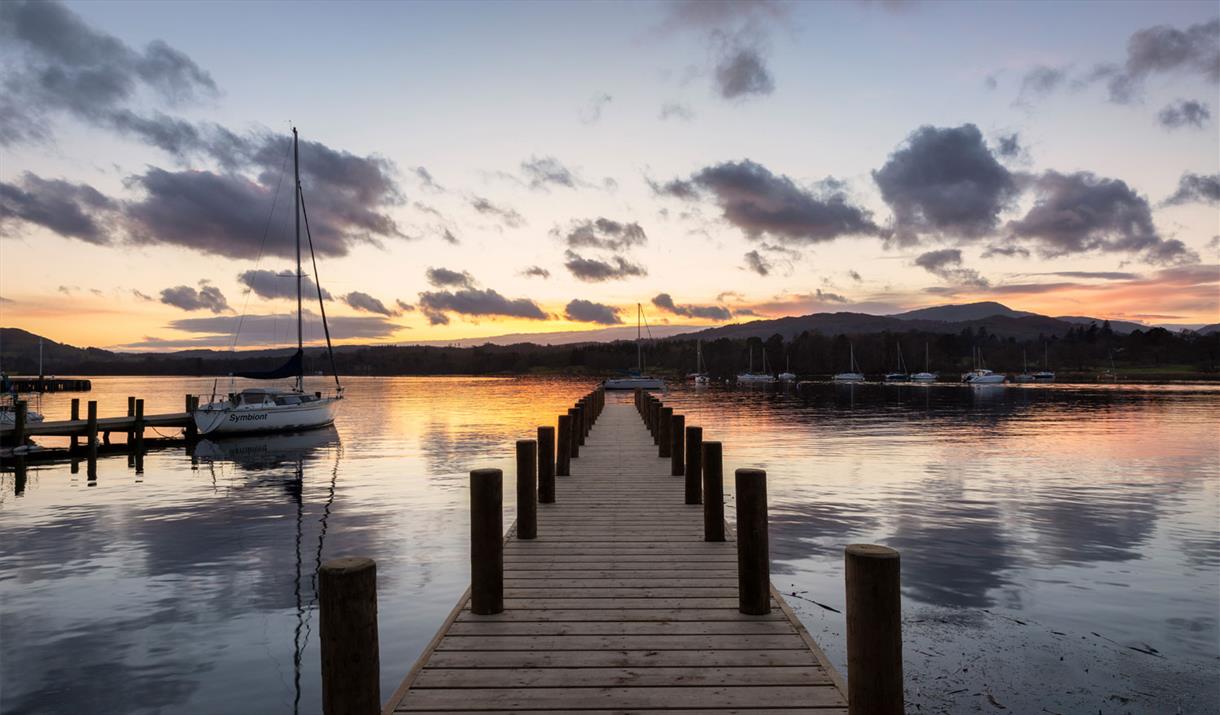
For many visitors, the Lake District is synonymous with Windermere, which is both England's largest lake (at 10.5 miles long, one mile wide and 220 feet deep) and its most popular. It’s been a major tourist centre since 1847, when the trains first steamed into town carrying passengers eager for the fresh air and stunning scenery, and it’s been pretty much the same ever since. Transport options have improved, and there’s a broader choice of leisure activities both on and off the water. Access to the lake is from Bowness-On-Windermere, which is just a short hop from Windermere town.
There are 14 islands in the lake, the largest of which is Belle Isle (formerly known as Longholme). In 1250 it was the seat of the Lord of the Manor and a Royalist stronghold during the Civil War. In 1774 an unusual circular house was erected on the island, which was sold (along with the island) to the wealthy Curwen family who renamed the island after their daughter, Isabella.
The lake has long been used as a highway for the transport of stone, minerals, charcoal and woollen cloth. A ferry service has operated across the narrowest point of the lake (Bowness to Ferry House on the western shore) since the 15th century. Today's modern Windermere Ferry takes cars and foot passegers across the lake in around 10 minutes and weather permitting, operates all year round.
The earliest craft were large rowing boats that carried people and animals, with passengers expected to help with the rowing. In 1870 the first ferry to run on underwater cables was introduced; a 20-minute service now provided by the modern Mallard ferry.
By the 19th century, wealthy businessmen from the urban areas began to regard the Lakes as a haven of scenic tranquillity, acquiring grand country retreats. Belsfield (now a hotel) was bought by the iron magnate, Henry William Schneider, in 1869 as a commuter home (he built a jetty at the bottom of the garden so he could sail to Lakeside in his steamboat, Esperance).
Storrs Hall was acquired by John Bolton in 1806 on proceeds from the slave trade. Brockhole, built in the late 1880s by Henry Gaddum, a wealthy silk merchant from Manchester, became a convalescent home before opening as the National Park Visitor Centre in 1969.
And lastly, Blackwell, an architectural gem from the Arts and Crafts era, was commissioned by Sir Edward Holt, a wealthy brewer from Manchester.
History of Windermere Lake
In Neolithic times (around 4,000 BC) the Langdales, near Windermere, was the centre of the stone axe making industry in the UK. Around 27% of all axes from this period found in the whole of the UK came from this area. There is archaeological evidence of settlement, farming and timber management for the building of houses and boats.
The Romans built their fort of GALAVA at the lake’s northern end (Waterhead). For more than a thousand years it was an important waterway for movement of heavy materials.
Influences through the centuries include the Vikings around 1000 AD, from whose language many Cumbrian words are taken. The Norsemen are believed to have introduced the Herdwick sheep to the Lake District.
Copper deposits near Coniston attracted German miners to the South Lakes area in the late 16th & early 17th centuries. Many of them settled here and married into the local communities.
By the end of the 18th century the beauty of the Lake District, and the South Lakes in particular, was attracting visitors. Wordsworth’s popular “Guide to the Lakes”, published in 1810, further promoted the Lake District as a tourist destination.
When the railway reached Kendal in 1846, and Windermere in 1847, visitors flocked to the South Lakes. The village of Windermere grew around the Windermere railway station, about a mile and a half from the lake. The village was originally called Birthwaite, but the railway company decided to call the station after the lake and the village name also changed.
In the late 19th century, wealthy businessmen from Lancashire built grand mansions overlooking the lake. Many of these have now been converted to hotels, such as the Langdale Chase Hotel. Others houses from this period include The National Park Visitor Centre at Brockhole, between Ambleside and Bowness. Wray Castle, almost opposite Brockhole, was the first Lake District holiday home of Beatrix Potter.
Book Tickets
TripAdvisor
Awards
- Cumbria Awards
 Member of Cumbria Tourism 2016
What's Nearby
Family Day Out – Walk the lakeshore, hop on a boat cruise, or enjoy a picnic by the water…
0.31 miles awayWindermere Jetty Museum is a vibrant, family-friendly visitor attraction dedicated to the…
0.66 miles awayThe Peter Rabbit Garden has proved tremendously popular with visitors who have delighted…
0.94 miles away

A magical indoor attraction that brings to life all 23 Beatrix Potter's Peter Rabbit…
0.94 miles awayStanding at the centre of the town of Bowness-on-Windermere, this Grade I listed church…
0.95 miles awayNestled in the heart of the Lake District National Park, Bowness-on-Windermere is a…
0.98 miles away
You may also like
Follow The Lake District, Cumbria on Social Media
Receive all the latest news, special offers and information from the Lake District, Cumbria

Ratings Powered By


© Cumbria Tourism